
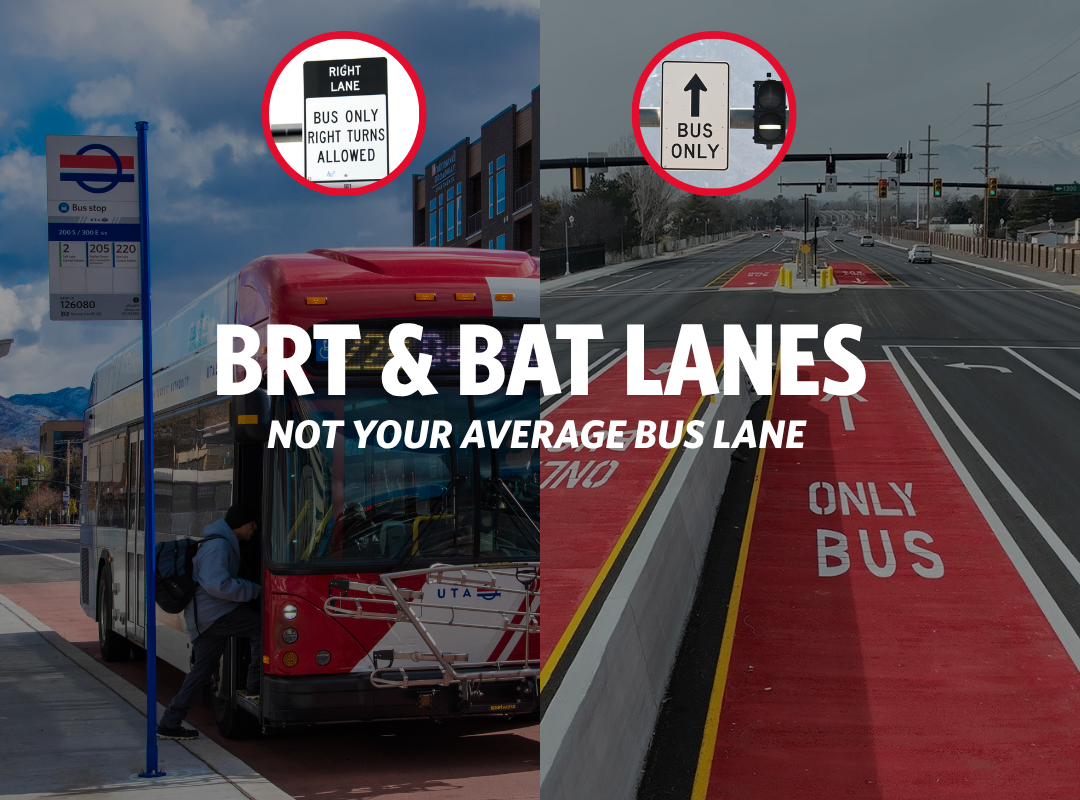
You have probably driven next to them, crossed them, or waited for the bus near them without thinking twice.
But bus rapid transit (BRT) and business access transit (BAT) lanes are not like regular lanes. They are designed to move buses efficiently through traffic and keep transit reliable for everyone who depends on it.
Knowing how to move around them safely helps protect you and everyone else on the road.
Let’s break it down from your point of view whether you’re driving, walking, or riding a bike or scooter.
If You Are Driving
When you are behind the wheel, BRT lanes are not part of your route.
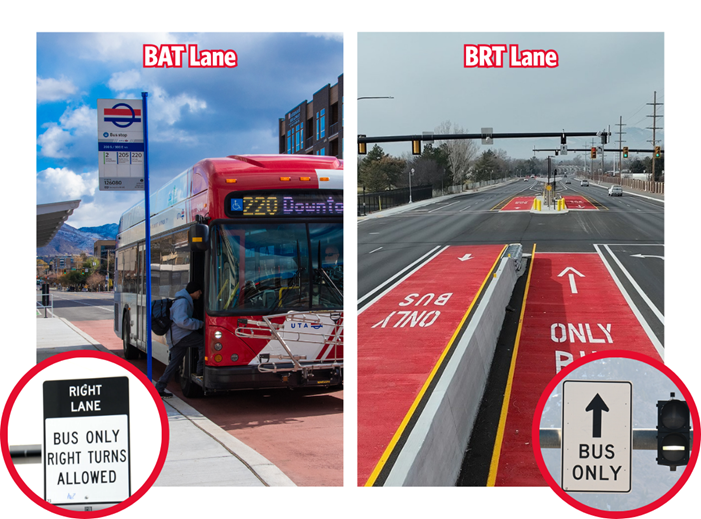
BRT lanes are dedicated lanes for buses only. Think of them like light rail on wheels. They are often located in the center of the road and are designed to keep buses moving without delay.
You should never enter a BRT lane. It is illegal to drive, bike, or walk in these lanes. You will also see stations located in the center of the roadway, which is another reason to stay alert and keep clear. Violations can result in citations.
BAT lanes work a little differently. You are allowed to use them, but only in specific situations. You can enter a BAT lane to make a right turn or access a business. You should not travel in the lane for long distances, and you should always yield to buses that are using it.
The key takeaway is simple. BRT is off limits. BAT is shared, but only for short, intentional use.
If You Are Walking
When you are a pedestrian near BRT or BAT lanes, awareness matters.
BRT lanes often run through the center of the roadway, which means buses may approach from unexpected directions. Always use designated, signalized crosswalks when crossing the road or accessing a station.
As a bus approaches, give yourself space and stand back at least 3 feet from the curb or platform edge. If you are walking with children, make sure you hold their hands near stations and crossings.
BAT lanes may include both buses and turning vehicles, so it is important to stay alert and only cross at marked crosswalks. Even when you have the right of way, take a moment to look twice before stepping into the roadway.
If You Are Riding a Bike or Scooter
If you are biking or riding a scooter, the same rules of awareness apply, with a few added considerations.
You should never ride in a BRT lane or cross through it outside of designated crossings. These lanes are for buses only, and buses cannot maneuver around unexpected obstacles.
When using BAT corridors, remember that vehicles may also be entering or exiting the lane. Stay alert, use crosswalks, and always expect turning traffic.
Being visible and predictable helps keep you safe, especially in shared roadway environments.
Where You Will See These Lanes
You will find BRT lanes along several key transit corridors, including:
- UVX in Provo and Orem
- OGX in Ogden
- MVX in Salt Lake County
BAT lanes are currently used in parts of Downtown Salt Lake City, with more transit improvements continuing to expand across the region.
Moving Through With Care
Whether you are driving, walking, or biking, these lanes exist for one reason: to keep transit moving safely and efficiently for everyone.
When you understand how to move through them, you help keep buses on time, streets safer, and our community better connected.
We Move Awareness. We Move Safety.
We Move You.